
Apart from them, consignments of 11 top importers, including LG, Samsung, Toyota, Honda, and Siemens, will also be allowed entry, relieving them of the 100 per cent inspection rule.

Hetero has priced the injectable drug at Rs 5,400 per 100 mg vial. With More drugmakers in line to launch the drug soon, the prices may see a further erosion.
Like everything else, the structure of banks may change, and banks may depend more on digital technologies and artificial intelligence for dealing with both their customers and employees.
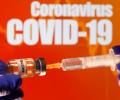
The Hyderabad-based firm will first make the drug available in high case load areas of Maharashtra and Delhi under the brand Covifor. A single dose vial is likely to cost Rs 5,000-6000.
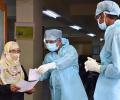
The committee has recommended Rs 8,000-10,000, Rs 13,000-15,000, and Rs 15,000-18,000 including PPE costs for isolation beds, and ICUs with or without ventilator, respectively, to all hospitals. Currently, hospitals are charging Rs 24,000-25,000, Rs 34,000-43,000 & Rs 44,000-54,000 (excluding PPE cost).

The antiviral drug may cost around Rs 55,000 for an 11-dose course, or Rs 5,000 per injection -- much less than the price of imports from Bangladesh, reports Sohini Das.
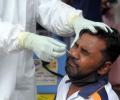
The testing rate is likely to slow down, report Pavan Lall and Sohini Das.

ICMR's serological survey, whose findings will be made public next week, suggests that the rate of contagion may be a lot higher in most-affected cities such as Delhi, Mumbai, and Pune.
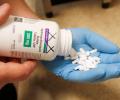
Once touted as a 'wonder drug', HCQ has been battling global controversies around its safety and efficacy as a prophylactic against the new coronavirus SARS-CoV-2.

About 300 employees would come under the ambit of voluntary decision.
The government is targeting 1,200 technical collaborations between Japanese companies and Indian investors for over Rs 42,000 crore, 200 joint ventures with overseas investors for Rs 14,000 crore, and another Rs 14,000-crore investment from about 50 multinational companies.

The incremental stress is mainly from sectors including power, infrastructure, constructions, hospitality, iron and steel, telecom, and realty.

India's biggest firm, Reliance Industries, has decided to cut salaries by 10 per cent in its oil and refining divisions. Several smaller companies like Kajaria Ceramics have followed suit with cuts as high as 40 per cent for those earning more than Rs 50 lakh.

Scores of employees took to social media to express disappointment and said they were asked to resign over WhatsApp calls. On Twitter, some said they had been asked to resign by May 31 and that there was no severance package and salary would be paid only for May.

The industry feels two factors have played a role in improving the offtake and reducing trade inventory - one is that the supply chain in pharmaceuticals has more or less stabilised, and secondly, with lockdown curbs easing and OPDs opening, some demand has grown at the consumer end as well.
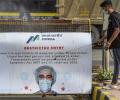
With projections suggesting the number of cases in the city will touch 75,000 by the end of May, civic authorities are working overtime to add to the number of beds.

Cipla is among the three Indian companies that signed a non-exclusive licensing agreement with US-based Gilead Sciences to make and distribute the latter's repurposed Ebola drug Remdesivir in 127 countries including India.

Most feel as the movement of people normalises, the in-patient volumes in hospitals will grow and by the end of May, occupancy should be around 50 per cent, and 75 per cent over a period of time.

Pharma companies gear up for the 'new normal' as they train and align their sales forces for a paradigm shift. GSK leads the charge with staggered return-to-work, others plans yoga sessions and health care webinars for salesperson's family.
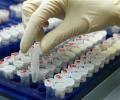
Researchers at Northwell Health in New York are testing the effects on Famotidine (used in high intravenous doses) on Covid-19 patients as a potential treatment. After the hospital announced its clinical trials, it led to a drug shortage in the US. Back home, however, there has not been any surge in the demand for Famotidine yet.
 © 2026 Rediff.com - Investor Information - Advertise with us - Disclaimer - Privacy Policy - Sitemap - Feedback - About us - Terms of use - Grievances